McCormick's Old Bay Leads Charge of Spices Back to Tin
McCormick's Old Bay, and newer clean-label players, are bringing spices back to printed tin, pairing shelf impact and vintage charm with potential sustainability upside as EPR pressures grow.
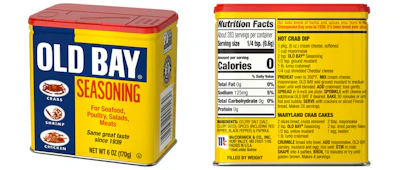
Old Bay Seasoning in tin: McCormick’s Old Bay returns to its classic printed tin canister—iconic blue-and-yellow graphics with a red lid—shown here with front panel and back label (nutrition facts/recipes).
OLD BAY®
Iconic Baltimore seafood seasoning Old Bay, the flagship spice of the Chesapeake Bay region for generations, is changing its packaging from plastic back to its original material, tin. While maintaining its fan-favorite logo and design, this brings back the classic feeling and user experience of years past, on shelves this month.
"Old Bay is more than a seasoning. It's a symbol of heritage, flavor, and Baltimore pride," says Giovanna DiLegge, VP, marketing, U.S. consumer at McCormick & Company. "The return to tin is our way of honoring generations of fans who've made Old Bay a staple for decades. From crab feasts with family and friends to much more, Old Bay has long been the flavor that brings people together."
More questions on sustainability/recyclability, equipment requirements, and more were distributed to McCormick to answer in more detail, but spokespeople declined. Eat Happy Kitchen “BBQ Dust” (front): Clean-label brand Eat Happy Kitchen debuts a vintage-inspired printed tin package for its BBQ Dust seasoning, designed to pop on shelf and look at home on the countertop.Eat Happy Kitchen
McCormick isn't alone among spice brands making the shift from a legacy format into printed tin plate containers. The woman-owned, clean label spice brand Eat Happy Kitchen is making its own move into fully redesigned vintage-inspired tin packaging, but not from plastic, rather from a recycled paperboard structure.
According to founder Anna Vocino, the shift to vintage-style tins began with the familiarity of old-school spice tins, which she says many consumers associate with home cooking and keeping seasonings on the counter near the stove. She says Eat Happy Kitchen wanted to reference that sense of familiarity while still creating packaging that feels modern and instantly recognizable on shelf. Vocino also believes the tin format aligns with the brand’s focus on clean, trustworthy ingredients, noting that Eat Happy Kitchen’s seasonings are gluten-free, sugar-free, and filler-free.
The redesign represents a complete overhaul of Eat Happy Kitchen’s packaging. Previously, the company’s seasoning line was sold in canisters made from recycled paperboard with an aluminum plug and a plastic top. The new packaging is printed tinplate with plastic lids. Vocino says the tins were designed to improve clarity on shelf and provide countertop appeal, aligning with what she described as a “kitchen couture” approach. She also referenced vintage spice tins as familiar objects for consumers who grew up in the 1950s, 1960s, and 1970s.Eat Happy Kitchen “BBQ Dust” (back): Rear panel of the new tin pack highlights nutrition facts, brand details, and a QR code—pairing retro aesthetics with modern connectivity.Eat Happy Kitchen
Vocino says the tin format offers stronger visual impact than the brand’s prior packaging, with richer color, increased vibrance, and improved readability. She says one of the reasons for moving to tinplate was its immediate recognition as a seasoning container.
Beyond nostalgia and vintage aesthetic, there may be sustainability implications for the shift, particularly as extended producer responsibility legislation increasingly emphasizes recyclability and recycled content. Vocino says Eat Happy Kitchen weighed sustainability tradeoffs in making the change, noting that the tins are more expensive to produce and include plastic lids, while the previous packaging relied on post-consumer recycled paperboard. She also says the tin containers tend to remain in home kitchens and are often reused rather than thrown away.
Vocino says Eat Happy Kitchen previewed the new tin packaging at Expo West, where feedback from grocery buyers and attendees was positive ahead of the national rollout.
Whenever we see multiple examples of brands large and small moving to a packaging format (or perhaps, returning to it, as the case may be), we want to know if the trade associations associated with the formats are seeing similar trends.
“An iconic American seafood seasoning, like Old Bay, calls for an iconic packaging option, like tinplate steel. Many food brands choose the metal can because it is a premium packaging type that is lightweight, locks in freshness, prolongs shelf life, and offers superior sustainability attributes. The steel used in canned goods is infinitely recyclable, and steel cans are the most recycled food packaging type in America," Tim Ebner, the Can Manufacturers Institute's VP of communications and marketing says of the recent spate of returns to tin (steel) cans.
 Eat Happy Kitchen “BBQ Dust” (front): Clean-label brand Eat Happy Kitchen debuts a vintage-inspired printed tin package for its BBQ Dust seasoning, designed to pop on shelf and look at home on the countertop.Eat Happy Kitchen