Sterling AnthonyThe bottoms of Regular Slotted Containers (RSCs) have outer flaps that abut, forming a center seam. The most utilized method of securing the bottoms of those corrugated boxes is taping. An inadequately taped bottom can fail the functions of containment and protection.
Ironically, it’s not tape that’s most frequently considered integral to a box’s fitness. That consideration is given to basis weight, flute, board, dimensions, manufacturer’s joint, and rating (Mullen or Edge Crush). And although the Box Maker’s Certificate (BMC) lists Gross Weight Limit, it’s under the assumption of a secure bottom.
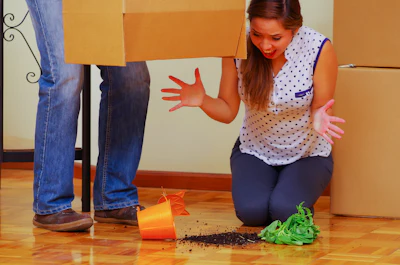
When the bottom falls out, contents loss and damage are likely, squandering all the time and cost expended up to that point. Even if some of the contents are salvageable, there’s still the additional time and cost for repackaging. Plus, there’s the damage to goodwill resulting from dissatisfied associates and customers.
Separately, there’s the specter of physical injury, when falling contents strike someone who is lifting or carrying the box. Being struck is not the only possible cause of injury, either. It can result from bodily contortions performed as someone either attempts to either catch the contents or get out of the way. Physical injury can happen anywhere in the supply chain, to a worker or to a consumer.
Because RSCs arrive knocked down, they must be set up and have their bottoms sealed before being loaded. So, users of RSCs need to know categories of tape, along with the factors that justify a particular choice. The factors are application-specific, including the contents’ weight, fragility, and value, along with the supply chain profile.
All tapes (at a minimum) consist of two components: a backing (substrate) and an adhesive. A strong applied pattern is the H-pattern, named for its resemblance to that letter. It’s formed by applying a strip of tape along the center seam of the bottom and separate strips up and along the seam where the bottom and end panels meet. Another strong pattern is a single strip of tape that runs the bottom’s center seam and up the end panels.
Water-activated tape (aka gummed-backed tape)
Water-activated tape (WAT) consists of a kraft paper backing and a dry corn starch-based adhesive that becomes sticky when moistened. The adhesive is absorbed into the fibers of the box, a fusion that results in a strong seal. Its strength makes it suitable for contents that are heavy and/or expensive, especially when parcel post shipping (with its rough handling) is involved. The latter fact is why WAT finds usage in distribution centers, order-fulfillment centers, and throughout e-commerce. Since WAT can’t be removed without structural damage to the box, nor reapplied, it provides a tamper-evident feature.
WAT does not have to be removed when recycling the box. That’s not as true of reinforced WAT: filaments sandwiched between kraft layers, held together as a laminate. The added strength of reinforced WAT comes at a trade-off of not only recyclability but also of a higher price. Another price trade-off of WAT (reinforced or not) is the necessity of a water source, i.e., a reservoir. On the credit side, all versions of WAT are printable, thus functional as a medium for communication.
Pressure-sensitive tape
Pressure-Sensitive Tape (PST) seals are surface seals because there is no fusion into the fibers of the box. Three attractions are at play: adhesion, cohesion, and tack. Adhesion refers to the bond between the adhesive and the box. Cohesion refers to the inner strength (hold-togetherness) of the adhesive. Tack refers to how well the adhesive sticks to the box on initial contact.
A popular PST has bi-oriented polypropylene (BOPP) as its backing and an acrylic-based adhesive. Its performance endures the physical forces imposed by a wide variety of supply chains. That, in addition to environmental conditions, such as, exposures to UV light; cold-to-hot temperatures; and low-to-high relative humidity. The tape is transparent, compatible with boxes that sport an outer liner of bleached kraft that is printed with text and graphics.
Escaping a sticky situation
A company experiencing bottoms falling out should not simply apply more tape, whether by width, length, or number of strips. Corrugated mummies aren’t the answer, given the increased material costs and the decreased operational efficiencies. As with all packaging-related decisions, success hinges on a systems approach: identifying components, quantifying their interrelatedness, and balancing trade-offs, for optimal results.
Useful resources include various performance testing protocols issued by ASTM, ISTA, ISO, and PSTC (Pressure-Sensitive Tape Council). They address such particulars as peel, tensile, shear, vibration, and drop—all under standardized temperature and RH. Tape suppliers typically commission laboratories to conduct the testing. Tape users, on the other hand, can require that certain test ratings be cited on the specification. The subject of testing gives new meaning to the phrase, “measuring tape.”
Sterling Anthony, CPP, consults in packaging, marketing, logistics, and human-factors. A former faculty member at the Michigan State University School of Packaging, his contact info is:100 Renaissance Center, Box-176, Detroit, MI 48243; 313/531-1875; [email protected]
 Sterling Anthony