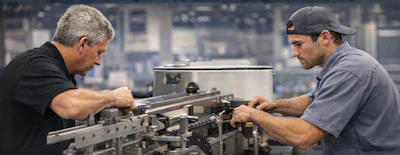
Family-owned OEMs have long been the backbone of the industry, with one generation often working alongside its successor.
A common thread in manufacturing is the story of the family business that grew into a successful enterprise through hard work and generations of commitment. Packaging and processing are no exception, as owner-operated OEMs have long formed the backbone of the industry. Yet despite their prevalence, sustaining independently owned OEMs remains difficult. Data shared at a recent PMMI Executive Leadership Conference by succession expert Richard Bryan shows that only about 30% of family businesses reach a second generation, 12% survive to a third, and fewer than 3% reach a fourth.
Against those odds, a group of OEM leaders is proving that generational continuity is still possible when succession is treated as an ongoing discipline rather than a single event. Conversations with leaders at PAC Machinery, Hamrick Packaging Systems, Polypack, All-Fill, and Spee-Dee reveal a consistent theme: successful transitions blend earned credibility, deliberate leadership development, and early governance, long before a handoff is required.
Their lessons form a practical playbook for family-owned OEMs preparing the next generation.
Earn respect first
For next-generation leaders, legitimacy is far from automatic. In fact, many say being “the owner’s kid” raises the bar rather than lowers it.
Ryan Edginton, third-generation president and CEO of All-Fill, lived that principle from day one. His first role was not strategic; it was operational. Working in the stockroom at $26,000 a year, Edginton learned that respect is earned through shared effort, not inherited authority.
“You don’t slide into a corner office,” he says. “You earn it by doing the same work everyone else does.”
Takeaway: In family OEMs, credibility is built on humility, visibility, and shared effort, not lineage.
Jordan Hamrick, second-generation president of Hamrick Packaging Systems, remembers sensing skepticism early on. Entering a company where employees had worked alongside his grandfather and great uncle, he understood credibility would come only through consistency, long hours, and results.
“People saw me as the boss’s son,” he says. “So I put my head down and worked for 15 years.”
At PAC Machinery, second-generation president Greg Berguig reinforces that credibility doesn’t stop once leadership is earned—it must be maintained. Even while running a $20–40 million business, Berguig remains visible on the show floor, setting up booths and working alongside his team.
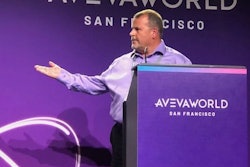
Only about 30% of family businesses reach a second generation, 12% survive to a third, and fewer than 3% reach a fourthSean Riley“You’re running a sizable company and still tightening bolts in a booth at PACK EXPO,” he says. “And right across the aisle, Kyle and Ryan Edginton from All-Fill were doing the exact same thing.”
Dave Navin, second-generation president and CEO of Spee-Dee, learned early how delicate family dynamics can be inside a business.
“People used to try to work me to get information on my dad,” Navin recalls. “My dad pulled me aside and said, ‘That’s part of learning. Send them to me directly.’”
Leave before you lead.
One of the strongest points of consensus across all five leaders is that outside experience matters. Leaving the friendly confines of the family business provides a perspective that no internal rotation alone can match.
Takeaway: Outside experience builds independence, perspective, and credibility while preventing entitlement.
Emmanuel Cerf, second-generation president and CEO of Polypack, is unequivocal on this point. If the next generation needs persuasion to join the business, he argues, succession is already compromised. Cerf believes working outside the family firm forces young leaders to confront different management styles and expectations, equipping them to return with ideas that challenge legacy thinking rather than reinforce it.
“If you have to convince them to do it, it will never work,” Cerf says. “They need to want it, and working elsewhere helps them decide.”
Berguig’s experience reinforces the point while adding nuance. He didn’t graduate with a predetermined plan to take over PAC Machinery. Instead, outside work and evolving opportunity gradually pulled him in.
“That organic entry made the commitment real,” Berguig says. “Not assumed.”
Edginton agrees but adds that credibility can also be earned internally, if next-generation leaders are willing to start at the bottom and accept criticism from non-family supervisors. Whether inside or outside the business, the common denominator is humility and accountability.
Navin took the idea even further. He left Spee-Dee for 15 years, built and scaled a healthcare information systems company to 500 remote employees, and only returned when the timing and interest aligned.
“We’ve told our kids they should work somewhere else for five years before joining the family business,” Navin says.
Bryan emphasizes that building bench strength before leadership transitions is critical and that outside experience remains one of the most reliable ways to do so without entitlement.
Modernize without erasing the foundation.
Communication sits at the heart of any successful transition, but working with relatives often introduces unspoken bias. How successors communicate with the prior generation frequently determines whether change becomes collaborative or contentious.
“I stopped bringing problems,” Berguig recalls of working alongside his father. “I started bringing plans.”
Hamrick describes a similar balance.
Takeaway: Modernization includes organizational design, not just machines or software.
“He’s been through things I haven’t,” Hamrick says of his father. “[The company] combines that experience with my fresh perspective and has found a new path to success.”
Generational tension around modernization is unavoidable but often productive. Hamrick admits that modernization at Hamrick Packaging often lagged vision, not because of disagreement, but because legacy systems and risk tolerance take time to evolve.
“Some ideas took a decade,” he says. “But the patience to get them right preserved trust while still moving the company forward.”
At PAC Machinery, Berguig describes modernization not as disruption, but translation. Whether upgrading IT systems, CRM platforms, or workflows, progress accelerated when evolution was framed as continuity rather than correction.
Navin adds a crucial nuance: modernization isn’t only technological.
“It’s not about being stuck in a role just because of your last name,” he says. “You have to do something you enjoy and then put the right people around you.”
At Spee-Dee, that meant restructuring leadership roles and elevating a non-family COO to oversee day-to-day operations.
Bryan’s succession frameworks consistently emphasize defining roles and decision rights early, before modernization efforts test relationships.
Culture can’t be bought.
All five presidents accept that consolidation and private equity aren’t going away. But as consolidation accelerates, they believe family-owned OEMs increasingly differentiate themselves through culture.
“Give people consistency,” says Edginton. “Give them a great place to work.”
Takeaway: Culture must be explicit, enforced, and protected, especially during change.
Berguig adds that culture erodes fastest when family conflict becomes public. He emphasizes handling disagreement privately and presenting a united front to employees, noting that professionalism, not bloodlines, sustains trust.
For Cerf, culture is inseparable from independence. He argues that family-owned OEMs retain the freedom to make customer-first decisions that large corporate groups simply cannot justify. Whether it’s reinvesting time, absorbing short-term cost, or adapting machines on the fly, Cerf believes these choices reinforce pride, not just profitability, across generations. “If we were owned tomorrow,” he notes, “the [next generation] wouldn’t feel the same ownership or pride. It wouldn’t be theirs anymore.”
At Spee-Dee, Navin believes culture only scales when supported by structure. The company formalized core values, built an outside board, and clarified ownership roles to reduce friction as it grew.
“We hire and fire based on [core values],” Navin says. “If people don’t believe what we believe, they shouldn’t be here.”
Bryan warns that culture is often the first casualty of poorly planned transitions, and once lost, it cannot be repurchased through capital or scale.
Legacy is earned, not inherited.
From PAC Machinery to Spee-Dee, these leaders demonstrate that family-owned OEMs don’t survive by resisting change—but by managing it intentionally.
Hamrick’s first succession was reactive, driven by loss and urgency rather than design. Navin’s was deliberate, structured, and supported by governance. Both agree on one point: waiting too long makes succession harder than it needs to be.
“You need to plan, communicate, and identify key people early,” Hamrick says. Navin adds that documented tribal knowledge and financial planning often determine whether a business survives transition or loses control to circumstance.
In modern manufacturing, legacy is not automatically handed down. It is re-earned, generation after generation, through humility and deliberate leadership
A Practical Playbook for the Next Generation
• Earn credibility early Start at the bottom, stay visible, and work alongside your team.
• Gain perspective outside the family business External experience builds independence, confidence, and credibility.
• Choose the business, don’t inherit it by default Genuine interest matters more than obligation.
• Modernize with respect for the foundation Bring solutions, not disruption, and pair new ideas with execution.
• Design roles and governance intentionally Define responsibilities by strengths, introduce structure early, and elevate non-family leaders when needed.
• Protect and reinforce culture Formalize core values, enforce them consistently, and keep family conflict out of the workplace.
• Plan succession long before it’s needed Capture tribal knowledge, develop bench strength, and communicate early.
 Only about 30% of family businesses reach a second generation, 12% survive to a third, and fewer than 3% reach a fourthSean Riley