Packaging’s Pathway to Digital Printing Transformation in Life Sciences
As evidence supporting the benefits of migrating from legacy print to digital continues to mount, manufacturers can set a baseline for how to establish these comprehensive services.
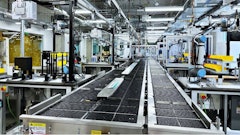
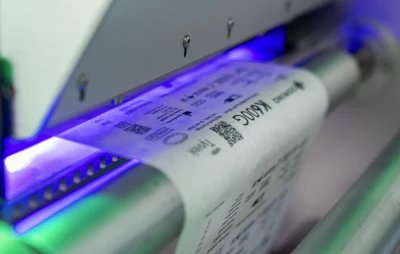
The K600G is a high-resolution digital printing system developed for high-speed serialized coding for packaging such as labels, medical-grade paper, and blister foils.
Domino Printing Sciences
Key Takeaways:
· In the digital printing space, the benefits that come with exploring these modalities continue to become more evident as technology advances and as customer demands shift.
· Many manufacturers continue to rely on standalone thermal inkjet and thermal transfer overprinting tools, but these older systems inhibit practices such as automation, data integration, and traceability.
· Having a collaborative and communication connection with the vendor is important to determining where to incorporate digital printing elements.
As an intensely regulated environment, the pharmaceutical industry is not known for its penchant to adopt quickly to new technologies like digital printing. Lengthy drug development cycles and revalidation measures typically combine for careful consideration to be weighed when assessing how any type of product or procedural change might impact patient safety or regulatory compliance. Migrating from a proven, integrated legacy process can be an especially complicated proposition, particularly from a packaging perspective.
“Along the pathway to digital transformation, packaging has certainly been overlooked for a long period of time,” says Ian Chapman, strategic manager for digital coding at Domino Printing Sciences, a global manufacturing company that develops and produces industrial coding, marking, and digital printing solutions. “It’s a very risk-averse industry, and it's very legislative. It's not going to be the industry that jumps in first when it comes to digital.”
According to Chapman and other professionals in the digital printing space, the benefits that come with exploring these modalities continue to become more evident as technology advances and as customer demands shift due to logistical challenges, evolving expectations, and societal pressures related to waste reduction and preservation of the environment.
“Recognizing packaging as a strategic lever is essential for end-to-end modernization,” says Laura Johnson, senior sales director at Loftware, a global technology company that provides labeling and artwork management services. “Many digital transformation strategies today focus on enterprise systems such as resource planning or manufacturing execution systems. However, packaging is critical to patient safety, regulatory compliance, and supply chain efficiency. Neglecting packaging can create bottlenecks, errors, and risks that undermine broader digital transformation goals.”
With projections claiming that the market for digital printing in the United States could grow to more than $20 billion by 2033, it will become increasingly imperative for manufacturers to think more strategically about their digital printing potential to not only remain compliant as modifications occur and to uphold safety, but to maintain a competitive advantage as more organizations make the migration.
Evolving From Legacy Methods
Widespread use of legacy printing and packaging processes continues to limit opportunities for today’s manufacturers, says Chapman, who has more than 20 years of experience in digital coding and printing, and has been influential at Domino in developing the company’s K600G, a ground-breaking, high-resolution digital printing system developed for high-speed serialized coding for packaging such as labels, medical-grade paper, and blister foils.
While many manufacturers continue to rely on standalone thermal inkjet (TIJ) and thermal transfer overprinting (TTO) tools that at one time were the industry standard, older systems inhibit practices such as automation, data integration, and traceability, he says. “In contrast, modern connected TIJ and TTO solutions offer cloud-enabled capabilities that align with digital-first manufacturing goals.”
The company’s Make Ready software enables seamless integration of printing systems into packaging artwork workflows.Hapa
Legacy print and packaging processes have also traditionally relied on pre-printed labels and containers that can abruptly be rendered obsolete when circumstances cause alterations to product information, regulatory requirements, and/or market-specific details. This can result in significant waste when large volumes of pre-print materials have to be replaced and discarded. Many organizations have also historically managed their labels through one-to-one relationships with individual products or stock keeping units (SKUs), by which manual updates are required whenever there’s an attribute to be modified, explains Johnson. “These legacy practices have introduced inefficiencies and compliance risks by increasing the reliance on manual processing and decentralized data sources,” she says. “As product portfolios have expanded across multiple geographies and regulatory frameworks, this approach becomes ultimately unsustainable.”
Identifying the symptoms of a lagging legacy printing presence isn’t an exact science, but there are a few tell-tale signs that warrant the pursuit of digital options, says Steve Manning, sales director at Hapa AG, a global printing company and member of the Coesia network that provides late-stage customization and on-demand solutions for pharmaceutical packaging manufacturers. “The hallmarks of outdated production environments include disconnected systems, manual processes, large inventories, low yields, and high levels of waste,” he says. “Batch-specific coding requirements, frequent artwork changes, and minimum order quantities often result in up to 40 percent of pre-printed components being discarded. SKU proliferation further drives frequent line changeovers, reducing overall equipment effectiveness (OEE) and increasing complexity. Digital printing eliminates these inefficiencies by enabling on-demand customization, reducing inventory, and improving sustainability.”
At RLG Healthcare, a division of Resource Label Group, digital printing capabilities are also improving the performance of advanced smart labeling through radio frequency identification (RFID) and near field communication (NFC) integration, says Kevin White, vice president of strategic accounts. “We incorporate variable data printing (VDP) using database-driven information to dynamically customize content and uniquely identify each packaging component within a single printing process through the introduction of covert security printing methods, personalization, and augmented reality (AR),” he says. “AR facilitates greater interactivity with end users via quick response (QR) code scanning, NFC tags, and RFID, thereby strengthening consumer engagement, materials traceability, and anti-counterfeiting measures.”
Also among the company’s comprehensive range of packaging and marketing solutions are options that enhance traceability of each pill, bottle, vial, or container, including the ability to variably print unique two-dimensional (2D)/QR codes to any given label, insert, or carton to ultimately assist in patient safety. “Digital printing unlocks an extensive spectrum of sophisticated capabilities to engage, support, and protect patients while providing inventive supply chain alternatives for pharmaceutical manufacturers,” says White.
Consultative & Verifiable Processes
At Domino, Chapman and his team assume an advisory mentality in their relationship with customers, an important aspect that anyone working with digital print should expect given its complexities. “The word ‘printing’ suggests that it's going to work, but it's not quite like that,” he says. “Some medias don't like liquid-based inks, other medias don't like being printed to with thermal transfer-based inks. Some don't like lasers, or they react in a different way. You need to understand, which is why people who are moving into this need it to be a consultative process. You really need to understand the substrate that you're printing onto and how that reacts with different ink types.”
Digital printing unlocks an extensive spectrum of sophisticated capabilities to engage, support, and protect patients while providing inventive supply chain alternatives for pharmaceutical manufacturers.Resource Label GroupWith digital printing, there are measurable improvements to its use that beat out legacy system each time. Efficiency and safety improvements can be measured through KPIs including decreased discarded components, OEE improvement, higher line efficiency, and reduced error rates. “Integrated vision inspection and serialization [as components of digital printing] cut human error by up to 90 percent, reducing the potential for recalls and rework,” he says.
The company’s Make Ready software enables seamless integration of printing systems into packaging artwork workflows. By interfacing directly with enterprise resource planning and manufacturing execution systems, the software automates convergence of product data, including batch numbers and expiration dates, with market-specific packaging designs. When it’s utilized alongside printing assets and Hapa’s Vision Secure inspection system, users can define precise inspection parameters to ensure that every print matches the intended design.
Cost effectiveness and substantially reduced lead times are also key advantages of digital printing, stemming from the elimination of traditional printing plates required for conventional flexographic printing coupled with the decrease in press setup times, says White. “Managing product portfolios with a high number of SKUs carrying a wide gamut of assigned volumes per item is a perfect match for our digital capabilities,” he says. “Time historically spent prepping conventional presses is reserved for longer production runs while focus on line clearance standard operating procedures is heightened and fosters product separation demands associated with shorter, digital print runs. When customers provide reliable forecasts, the cost savings can be substantial.”
Having a collaborative and communication connection with the vendor is also important to determining where to incorporate digital printing elements, says Chapman. “If you're buying in pre-printed, finished product from somebody else - that's probably a big hindrance to being able to put some kind of digital print on there, because it's being generated in high volume,” he says. “You might have some kind of embossing or hot stamp, but quite a low-tech system to add any last-minute information. And if it’s shiny, varnished material, that might not be the best to work with certain ink types. If you want VDP on a product, or last-minute customization, or to put your batch or expiry information on there, you might need other technologies. Digital printing can also eliminate the need to stock hundreds of pre-printed foil variants and support the introduction of smart 2D codes to unlock traceability, patient engagement, and compliance in one step.”
Connected on the Cloud
The use of cloud technology has also become a key component of the ongoing digital printing transformation, with one recent market analysis projecting growth to hit nearly $10 billion during the next 10 years.
“Cloud-enabled solutions make it possible to track how quickly and accurately label changes move from request to approval to production, while supporting real-time collaboration across regulatory, quality, packaging, and manufacturing teams,” says Johnson, whose expertise includes automatic data capture (AIDC) through barcode technologies and RFID data collection, both of which highlight some of the specific cloud-based advantages. “Cloud services ensure that all stakeholders, regardless of location, work from a single source of truth,” she says. “This reduces errors, enables real-time updates, and simplifies compliance reporting.”
Also among the company’s comprehensive range of packaging and marketing solutions are options that enhance traceability of each pill, bottle, vial, or container, including the ability to variably print unique two-dimensional (2D)/QR codes to any given label, insert, or carton to ultimately assist in patient safety. Resource Label GroupCloud platforms also support automated unique device identification (UDI) generation, cross-border regulatory alignment, and rapid response to audits, which is crucial for global operations.
Defining Best Practices
Although technologies and processes are still rapidly developing, best practices are beginning to emerge. “By owning the entire process — from ink development to software and hardware — we can ensure predictable, validated outcomes and measurable quality standards, reducing or even eliminating error rates compared to manual processes,” says Manning.
Examples of best practices include maintaining centralized label management systems with validated templates, enforcing role-based access to prevent unauthorized changes, and ensuring that any requested label updates undergo structured review and approval processes,” adds Johnson. “Automated version control, robust audit trails, and compliance with global regulatory standards such as the U.S. Food and Drug Administration and European Union Medical Device Regulation are also essential,” she says. “Regular training, process validation, and integration with production systems further safeguard patient safety.”
Applying best practice also involves the application of collected data generated by smart technologies, says Chapman. “It's not just about complying now with the legislation that you have to put your code and data onto a product,” he says. “It's now using that code and data to do something that actually makes a difference. Those people who are following best practice are looking at what they're printing and using that data in a certain way to actually give something valuable. And I think at that point the best practices are that you are getting something out of the data as opposed to just following the ‘have to.’”
 The company’s Make Ready software enables seamless integration of printing systems into packaging artwork workflows.Hapa