Plant data has grown exponentially, and food manufacturers are playing catch up in data monitoring investments.
everythingpossible/Adobe Stock
Data monitoring investments are accelerating across food manufacturers. Smart manufacturing investments in automation, machine learning, and predictive maintenance are not slowing down. The 2025 Manufacturing Outlook survey revealed that control system investments ranked number one in the food segment, while digital field devices, sensors, and electronic record investments rounded out the top five.
Accordingly, plant data has grown exponentially, and food manufacturers are playing catch up in data monitoring investments. These investments are focused on increasing throughput and driving innovation. At the Connected Worker: Manufacturing Summit conference in October, Arnold Kogan, Managing Director and Partner at Boston Consulting Group (BCG), said, “Innovation is needed to tackle more, since food companies are not launching fast enough and missing margins.”
Slow product launches can be traced to many issues, such as delays in food formulation development, missed regulatory requirements, and a lack of real-time monitoring in the hands of operators. Luckily, there is a range of middleware solutions—big and small—that can be implemented for real-time manufacturing metrics, such as OEE, machine center performance, predictive maintenance tools, and more.
Data monitoring evolution
Plant managers are evaluating numerous solutions to provide real-time data visibility for operators and relevant metrics, including manufacturing execution systems (MES), productivity software, and machine learning solutions. Food manufacturers’ focus is on relevant, and possibly advanced, metrics to improve throughput while understanding workforce dynamics.
Operators are struggling to manage new reports and advanced manufacturing metrics. “My first project was with a food and beverage company, and they had basic reporting with no historical trending, so we created a more detailed report,” said Elizabeth Hill Reed, Director of SCADA and MES at DMC at the Inductive Community Conference. “At this same company, we did another project the next year, and the operations staff had no idea that this previous report existed. In some cases, it’s difficult to get operations to use data in meaningful ways.”
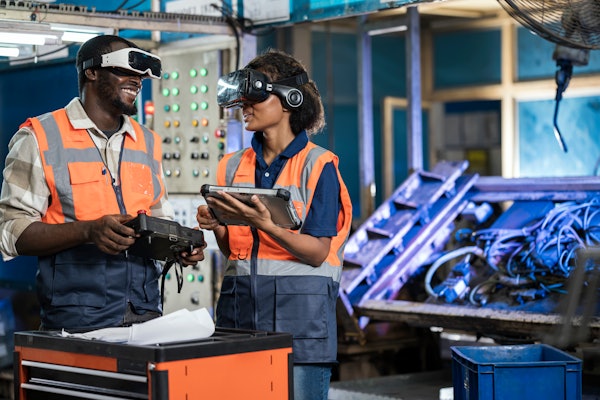
Innovation for operators means fewer platforms to log in to and more time to troubleshoot and evaluate OEE and other KPIs.ServiceNow/Grant Gerke
As MES technology has evolved from rigid proprietary platforms to lightweight modules combined with supervisory control and data acquisition (SCADA) platforms, adoption has grown. Targeting specific servers—process or packaging—and being able to pass data through a range of industrial network protocols, such as APIs, OPC UA, and other agnostic tools, has made detailed reporting easier.
In addition to acting on relevant metrics, brands want to repurpose staff and do more. According to Rockwell Automation's2025 State of Smart Manufacturing report, “Through increased use of smart manufacturing technology, 48% expect to repurpose workers to different roles or hire more workers. Sustainable success depends on a workforce that can evolve, making continuous training not just a support function but a driver of organizational resilience and growth.”
“There were a lot of challenges when we started this data collection journey,” said Raju Mariyappan, Director of Digitization and Reliability at Niagara Bottling during a recent ARC Advisory case study presentation. “There are different types of data sources like sensors, nodes, controllers, PLCs and different communication protocols. Data is scattered everywhere.”
Niagara Bottling, a large manufacturer of bottled water and soft drinks, adopted a system software solution that eliminated preventive maintenance routines across 25 plants, freeing up staff for other tasks. “We eliminated our previous work order management system for preventative maintenance for utilities,” said Mariyappan. “We don't need to visit the equipment and take readings since we eliminated it completely.”
To stay on top of motor maintenance in its processing areas, Niagara uses Litmus Edge on virtual machines and sends data—vibration frequency, current, and voltage checks—to Microsoft’s Azure Cloud and the Oracle Maintenance System. “We want to bring it to one platform where we can do all the analytics and provide visibility to the plant team,” added Mariyappan.
The edge computing platform has been scaled to 25 Niagara water processing and packaging facilities in the U.S.—the company has a total of 45 plants in the U.S. The system solution scales across all plants and collects more than 20,000 data points per hour, with an alert notification system that monitors threshold levels based on statistical and predictive modeling.
“We alert plant teams on what is going to happen in the next six hours, so that the plant team can decide what they want to do,” said Mariyappan.
Relevant KPIs and the workforce
Lightweight system solutions are creating flexibility for plant managers to set relevant KPIs and expand the workforce. Midsize companies see lightweight solutions as a good first step for KPIs that collect safety, quality, delivery, and cost metrics, or overall equipment effectiveness (OEE) numbers.
The Little Potato Company is a midsize food manufacturer moving down this path. The brand decided to standardize its KPI processes and manufacturing metrics across its plants using QAD Redzone’s Connected Workforce platform. The Little Potato Company faces the same workforce challenges many manufacturers face today: high turnover, limited operator experience, ongoing retraining, and language barriers.
Management recently standardized OEE metrics across five production lines at its Deforest, Wis., plant. “We weren’t measuring OEE and not providing visibility of what targets would be. The employees had no idea,” says Mike Szewczyk, Director of Manufacturing at The Little Potato Company.
To solve this problem, the brand uses the productivity module to deliver real-time OEE dashboards, downtime tracking and shift-winning metrics to operators and plant managers. The plant has achieved 13-point OEE improvements at one plant and 18-point improvements at a second plant following recent installations, according to the company.
The Little Potato Company has implemented three modules across its plants, including the productivity, compliance and reliability solutions from Redzone. The compliance module allowed the Wisconsin plant to focus on overfills. “Over the past month, we’ve been working on weights and found that we were 5% overweight prior to having these (compliance) checks,” says Preston Benisch, Assistant Plant Manager at The Little Potato Company.
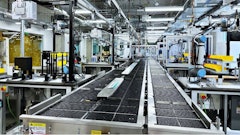
The Little Potato Company’s new productivity solution increases OEE by 13 points at one plant and 18 points at a second facility.The Little Potato Company
“Continuous improvement routines and collaboration tools that are not grounded in real OEE data have limited impacts on productivity,” says Katie Bellot, Director of Product Marketing at Redzone Software. “Problem solving, communication, and lean habits are beneficial, but without tangible data around the impacts, it’s very hard to prioritize problems or realize the value of the problems solved.”
The common data monitoring platform at The Little Potato Company also provides visibility for operators across all production lines. “The solution allows operators to stay in one spot, and we don’t have to wander around the plant to find out what’s going on with all five lines in the plant,” adds Jenn Williams, QC3 at The Little Potato Company.
Brands see a common operator platform as a crucial ingredient for higher throughput. At the recent Connected Workforce Conference, John Dougherty, Head of Manufacturing for the Americas at ServiceNow, revealed that, on average, 11 apps are used by one worker each day in manufacturing. In his presentation, Dougherty demonstrated how agentic AI technology will accelerate troubleshooting for machine downtime within frontline worker platforms and how these platforms can digitally document knowledge from experienced operators and engineers on the plant floor.
Metrics are always a moving target at plants, but the wave of data-monitoring investments is bringing brands closer to standardizing reporting and moving toward higher throughputs.

 Innovation for operators means fewer platforms to log in to and more time to troubleshoot and evaluate OEE and other KPIs.ServiceNow/Grant Gerke