Artificial Intelligence was not new when ChatGPT made it a household name near the end of 2022. The next few years saw AI grow incrementally in use in manufacturing, but grand use cases were still in the talking stages. According to four predictions from Maggie Slowik, Global Industry Director for Manufacturing at industrial AI provider IFS, 2026 is shaping up to be the year manufacturers must make it work or risk falling behind.
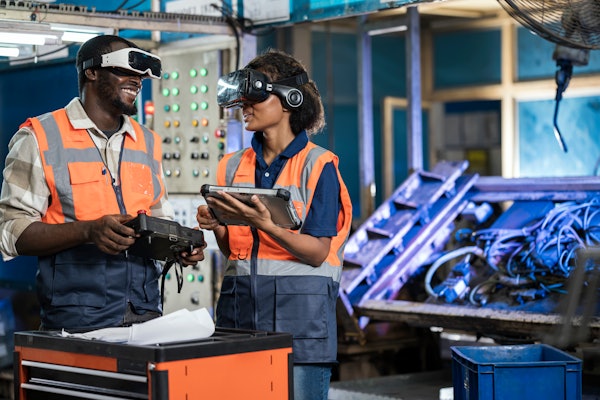
AI is no longer an abstract capability living in dashboards, pilot projects, or executive strategy decks. It's moving closer to the physical realities of production, showing up on the shop floor, in workflows, and alongside human decision-making.
For packaging and processing OEMs, this doesn't mean all machines will suddenly be "AI-powered." But AI is no longer a futuristic solution; it is an active participant in solving organizational friction, labor constraints, supply chain volatility, and sustainability mandates.
1. AI exposes rigid structures in machine design
By its very nature, manufacturing is built on structure. Planning hands off to production, who hands off to maintenance, who hands off to service.
Similar silos exist inside packaging and processing machines. Each are collections of tightly defined subsystems—mechanical, electrical, controls, safety—optimized independently. But AI-enabled capabilities, even modest ones, don't respect those boundaries. Diagnostic intelligence crosses mechanical and controls domains. Operator guidance touches HMI, software, and process knowledge simultaneously. AI thrives when information moves fluidly.
For OEMs, this means future-ready machines need less rigid internal architecture:
- Controls platforms that can share context across functions
- HMIs that don't just display states but explain decisions
- Software structures designed around workflows, not components
2. Robots change the workforce equation
IFS joins the growing majority who view automation and robotics as a response to a worsening labor model.
Packaging machinery builders see this daily:
- Operators with less training
- Maintenance teams are stretched thin
- Customers are asking for automation in places once considered "manual forever."
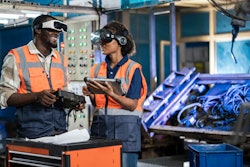
The answer is more complex than adding more robots. The solution lies in designing machines that allow humans and automation to work side by side in new ways.
That shows up in practical decisions:
- Safer, more collaborative zones
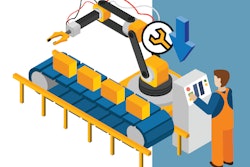
- Robots embedded inside machines, not just fenced-off cells
- Mobile automation handling replenishment of cartons, cases, and film—tasks once assigned to entry-level labor
Robots are no longer just tools to increase throughput. They are systems that amplify output in a world where labor availability is often the limiting factor. OEMs that understand this are already designing machines around who won't be there, not just who will.
3. Supply Chain Stress Tests shaping expectations
IFS's third prediction shines a light on supply chain stress testing becoming a routine internal capability rather than a consultant-led exercise. What does this have to do with packaging machinery design?
When supply chains are volatile, machines are expected to absorb variability:
- Different materials
- More frequent changeovers
- Shorter runs
- Faster reconfiguration
AI-enabled supply chain modeling won't just inform sourcing decisions; it will influence how often customers ask machines to change what they do. In 2026, customers won't necessarily ask for "AI machines." They will ask for machines that don't become liabilities when the supply chain shifts again. Flexibility, modularity, and configurability will matter more than theoretical maximum speed.
4. Sustainability enters machine design
Traditionally, sustainability has often lived upstream (materials) or downstream (reporting). But as AI enables real-time energy, emissions, and waste monitoring, machines themselves become measurable factors.
This has direct design consequences:
- Energy consumption becomes a performance metric, not an afterthought
- Pneumatics, heaters, and motion systems face new scrutiny
- Data collection at the source becomes non-negotiable
AI doesn't magically make machines sustainable. What it does is remove excuses. When resources can be measured continuously, inefficiency becomes visible. In turn, visible inefficiency becomes unacceptable.
OEMs that design machines with sustainability baked into operation—not bolted on through reports—will be better aligned with where customer expectations are heading.
In 2026, the story is now longer about AI’s growing impact on packaging machinery. It's that the definition of a "good machine" is quietly changing, and OEMs who recognize that shift early will shape what comes next.