Live from East: Is the Future Full-Service Automation?
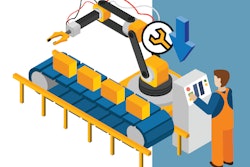
FORMIC’s Full Service Automation model moves beyond Robots as a Service, shifting to a subscription model that delivers guaranteed production outcomes, faster deployment, and built-in flexibility.
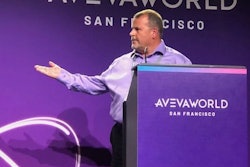
Danijel Lolic, vp of automation engineering for FORMIC, at PACK EXPO East 2026's Innovation Stage.
At PACK EXPO East 2026, Danijel Lolic, vp of automation engineering for FORMIC, delivered a clear message to manufacturers evaluating automation: Maybe instead of buying robots, start buying production outcomes.
While Robots as a Service (RaaS) has already shifted automation from CapEx to OpEx, Lolic argued on the Innovation Stage that the next evolution goes further. FORMIC calls its Full-Service Automation a model built not around hardware access, but around guaranteed production performance.
“The robot isn’t the thing,” Lolic told attendees. “The production outcome is the thing.”
The catch with traditional automation thinking
Manufacturers have long justified automation through multi-year ROI models tied to capital purchases, but Lolic challenged that approach directly. In fast-moving sectors like food and beverage, product mixes, packaging formats, and retail requirements shift quickly. Long development timelines and rigid system designs create risk. When production needs change, capital equipment doesn’t always adapt.
“You might not even be running or have that product 18 months from now,” he said. “And yet we’re justifying systems on four- or five-year ROI models.”
RaaS helped address part of that challenge by reducing upfront capital exposure. Instead of purchasing a robot, manufacturers subscribe to it. But according to Lolic, RaaS often still centers on the machine itself. Full Service Automation shifts the focus, as manufacturers don’t buy equipment; instead, they subscribe to production capability.
The service bundle includes:
Robotic hardware
Integration and deployment
24/7 service and support
Ongoing optimization
Personnel support where needed
“There’s no capital,” Lolic said. “You don’t buy the system. You pay monthly for the production outcome.”
Full Service Automation shifts the focus, as manufacturers subscribe to production capability.Most agreements are structured as month-to-month or annual contracts, preserving flexibility if production requirements shift. If the line changes, the automation can change with it.
This flexibility is central to the model.
“Very few people are packaging the same thing today that they packed 10 years ago in the same way,” Lolic noted.
Instead of locking manufacturers into fixed configurations designed around long-term forecasts, Full-Service Automation emphasizes adaptability.
Speed to impact
Another major theme of the presentation was time-to-value.
“Think about time to impact in weeks, not years,” Lolic said.
Traditional automation projects often involve lengthy scoping, engineering, and installation cycles. By the time a system is fully deployed, production needs may already have evolved.
FORMIC promotes rapid deployment and incremental wins, starting with focused applications like palletizing and expanding from there.
Several customer examples illustrated the approach. Taffy Town, a fast-growing confectionery manufacturer in Utah, began with a three-month agreement focused on palletizing. After early success, the deployment expanded into additional end-of-line automation.
Other manufacturers followed a similar path, starting with a contained solution, validating performance, then scaling.
The goal, Lolic emphasized, is to “stack wins” quickly while maintaining flexibility.
Rethinking production economics
Lolic also addressed a financial dynamic often overlooked in automation discussions: marginal production cost.
In labor-intensive environments, the cost of incremental output, especially during overtime or peak demand, can rise sharply. Fatigue, errors, and overtime premiums increase the true cost of each additional unit.
Under a flat subscription model, that equation changes.
“As your production grows, your marginal labor cost goes to zero,” Lolic explained. “Your numerator grows, your denominator stays the same.”
Because the monthly automation fee remains fixed, increased throughput improves overall unit economics without increasing labor costs in proportion.
This creates a built-in incentive to maximize output and avoid the production slowdowns that often accompany labor constraints.
Technology as an enabler, not the objective
Throughout the presentation, Lolic repeatedly cautioned against focusing on technology for its own sake.
“Don’t focus on the cool technology,” he said. “Focus on the outcome.”
Automating a flawed workflow simply produces inefficiency at a higher speed. Instead, Full Service Automation begins with evaluating production bottlenecks, packaging constraints, ergonomics, and downtime drivers.
In some cases, small packaging adjustments, enabled by automation, can yield significant material savings or throughput improvements. The automation becomes part of a broader production optimization strategy, rather than a standalone solution.
As Lolic told the PACK EXPO audience, the key question is simple:

 Full Service Automation shifts the focus, as manufacturers subscribe to production capability.