The days of drainage being nothing more than concrete-embedded infrastructure have passed, according to Viking Kristjansson, VP of sales engineering & channel development at Global Drain Technologies at PACK EXPO East’s Innovation Stage. It is a critical, sanitary, inspectable system, one that directly impacts food safety, worker safety, and long-term operational reliability.
Kristjansson presented a strong argument that many facilities still treat drainage as an afterthought, especially older plants. The consequence? Sanitation hazards, structural decay, and expensive underground failures. He cited industry research showing that a significant number of positive bacterial swabs in food plants can be linked to floors and drains, highlighting their vital role in hygienic design.
Hidden risks beneath the floor
While visible drain damage like broken grates, chipped floor coatings, and improper slopes pose immediate safety and sanitation risks, Kristjansson emphasized that the real problem lies hidden underground. Many older facilities still use cast iron piping installed 40 to 50 years ago, far beyond its expected lifespan. Exposure to modern sanitation chemicals, hot caustics, and aggressive CIP (clean-in-place) processes speeds up deterioration. This can lead to pipe collapse, voids beneath slabs, restricted flow, and in worst cases, catastrophic floor failures.
To make matters worse, repairing underground drainage in a food facility often requires disruptive tear-outs. This requires a full plant shutdown, which few processors can afford operationally
Poor designs compound the problem
Kristjansson highlighted how improper drain selection and layout can create long-term complications. For example, area drains, trench drains, and slot drains all have appropriate applications, but he often sees them employed incorrectly.
Area drains seem to be the catch-all solution many operations rely on, and they don’t cause an issue in low-flow, low-solids applications. But overreliance on traditional area drain layouts can dramatically increase underground piping, sometimes adding hundreds of feet of pipe and dozens of P-traps that are difficult to inspect, clean, or repair.
Trench drains are effective in high-solids or high-volume discharge areas, such as meat processing or canning lines, but are often avoided due to perceived cleaning challenges.
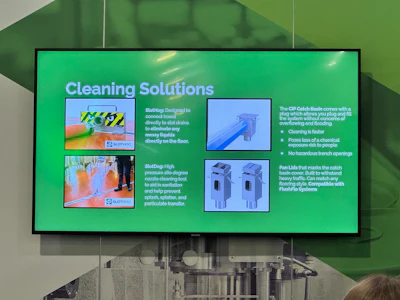
Slot drains are often misunderstood, but can provide sanitary, accessible solutions in many production zones when paired with proper cleaning tools and inspection methods.
Kristjansson supported formal drainage assessments performed by external specialists. These evaluations analyze floor slopes, drain conditions, underground infrastructure, and sanitary risks, resulting in a phased, actionable improvement plan.
“Band-aid” repairs, he warned, often cost more over time than strategic upgrades.
Cleaning, SOPs, and Technology Matter
Beyond design, Kristjansson addressed operational realities. Cleaning windows in many facilities have shrunk from 10–12 hours to as little as four to six. If drains are difficult, or dangerous, to access, they simply won’t be cleaned properly.
He highlighted advancements such as:
- Tool-assisted cleaning systems for slot drains
- High-pressure cleaning devices that eliminate the need to remove grates
- CIP-assisted drain sanitation
- Inspection tools such as borescopes
- Installation features like integrated keyways to improve floor coating adhesion and reduce separation
However, he emphasized that even the best drain design fails without proper SOP enforcement and management oversight.
Planning for the long term
Kristjansson closed by urging processors to take a lifecycle view of drainage systems. That means:
- Selecting the right drain type for each processing zone
- Minimizing underground piping where possible
- Using corrosion-resistant materials
- Ensuring proper installation methods
- Partnering with experienced drainage specialists
- Phasing upgrades strategically to avoid major downtime
For processors operating in aging facilities, he acknowledged the desire for new builds, but stressed that legacy plants can still be transformed through structured planning and execution.