New global research reveals AI’s rapid rise, the urgent race toward circularity, and the strategic gaps organizations must close to remain competitive in the next decade.
Industry leaders increasingly see AI, sustainability, and circularity converging to shape packaging’s future by 2035.
Rick Rangler. Cobie Blue Studios
Todd Bukowski, Principal, PTISPTISAs the packaging sector accelerates toward 2035, industry leaders are signaling a decisive shift. The future will be shaped as much by data and digital intelligence as by materials and machinery. Insights from the triennial PTIS Future ofPackaging Thought Leader Survey – 2035reveal an industry undergoing significant change, where AI, sustainability, and circularity dominate the strategic agenda. With responses from 183 global leaders in industry, academia, consulting, and the full packaging value chain, the findings provide a broad view of what’s coming next.
AI Bursts onto Scene
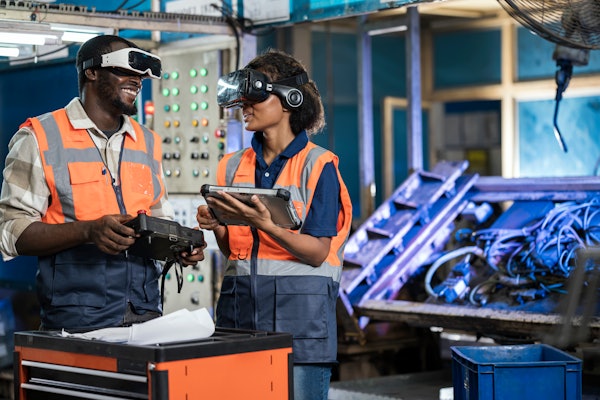
In the last survey cycle, Artificial Intelligence barely registered. Today, it stands firmly as the top impact force for the decade ahead, cited by more than 40% of respondents. This rapid rise reflects the sector’s recognition that AI is moving out of the experimental phase and into operational use.
Leaders expect AI to reshape packaging development end‑to‑end, from accelerated design iterations to production automation, logistics optimization, and enhanced consumer engagement. Among the most powerful applications is AI‑enabled sortation at Material Recovery Facilities, where machine learning improves material identification and boosts recycling accuracy, throughput and quality.
AI is poised to shorten packaging development cycles, improve ability to simulate performance, and unlock supply chain efficiencies that reduce waste and cost. The industry is under pressure to innovate quickly while also reducing environmental impact. AI offers a way to address both.
Sustainability, Now More Realistic
Although environmental sustainability has defined the last decade of packaging, the survey reveals a subtle but important shift. Sustainability still dominates most categories, including opportunities, risks, and science and technology priorities. But the tone has matured.
Leaders point to design for recyclability as the top opportunity for the third consecutive survey cycle, with advanced MRF technologies and material simplification close behind. Yet despite its prominence, sustainability dropped in perceived importance among future workforce skills, overtaken by technical expertise, adaptability, and collaboration.
This signals an evolution: sustainability is no longer a specialty—it is an embedded expectation. What organizations need most now is the talent capable of executing it in an increasingly technical and digitally‑enabled environment.
Achieving circularity was cited as the single greatest risk facing the industry between now and 2035. Respondents worry that circular systems may not mature fast enough. If they fail, the result could be material shortages, regulatory backlash, consumer distrust, and escalating waste crises.
But with risks come rewards. Circularity also represents one of the industry’s most significant opportunity areas. Respondents pointed to several enablers for circularity, including chemical or advanced recycling to process hard-to-recycle materials, better consumer education around recovery systems, improved sorting technologies at MRFs, and simpler material structures that are easier to recycle.
The leaders expected to drive this transition? Brand owners and the EU, followed closely by industry associations and consumers. Brand owners and policymakers were identified as key drivers of the transition. Many respondents also pointed to consumer pressure.
Preparing for the Next Decade
More than half of respondents said their organizations are not yet ready for the future, citing short-term focus, lack of strategic investment, and insufficient leadership alignment with long‑term sustainability and circularity goals.
Leaders also emphasized several steps companies can take now. These include embedding foresight into strategic planning, strengthening technical packaging capabilities, and forming more cross-industry collaborations. Respondents also pointed to the need to prepare for accelerating regulation and to design packaging with both consumer behavior and real-world recovery system limitations in mind.
Respondents say companies that move early and invest in technical capability will be better positioned for the decade ahead.
It appears that the 2035 horizon will not be defined by a single technology or material, but by the convergence of AI, sustainability, and circularity. Packaging systems are becoming more data-driven and more connected to broader environmental and economic systems.

 Todd Bukowski, Principal, PTISPTIS