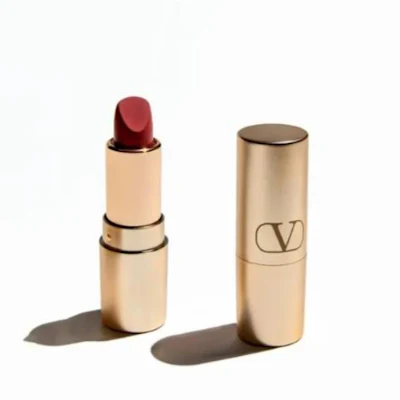
L’Oréal Group has collaborated with French company Cosmogen to develop customized mini lipstick formats for its brands Lancôme, YSL Beauty, Armani Beauty, and Prada Beauty. These mini products are intended for travel retail and discovery sets, offering consumers smaller versions of luxury cosmetics while preserving the aesthetic and performance standards of full-size products. Cosmogen provided each brand with bespoke design and manufacturing services and has also introduced a standardized 1.4 g “ready-to-go” format to help balance cost control with premium presentation. The development process involved individual projects for each mini lipstick, allowing the packaging to reflect the specific brand identities, including details such as color finishes, decorative elements, and mechanical functionality. The packaging was designed to maintain reliable application mechanisms and precision decoration despite the reduced format size, aligning with industrial production requirements. The mini-format strategy supports brand accessibility by enabling multi-shade collections at a lower entry price point, targeting consumers interested in travel-sized products or introductory sets. Additionally, the approach aims to appeal to Gen Z preferences, where smaller, portable and discovery-friendly packaging formats are increasingly favored.
The updated packaging format focuses on ingredient minimalism.ThePackHub
Marks & Spencer Revises Packaging for Ingredient Transparency
UK retailer Marks & Spencer (M&S) has revised its packaging approach for its Only Ingredients product range by placing simplified ingredient lists prominently on the front label. The updated packaging format focuses on ingredient minimalism, aiming to reflect the stripped-back recipes by clearly communicating the number and nature of ingredients directly on the pack front, rather than requiring consumers to read the back-of-pack declaration. Each label now displays ingredients in descending order by weight, adhering to regulatory requirements while signaling a move towards greater clarity and consumer trust. The new visual identity features text-heavy, functionally designed front panels with minimal graphic distraction, intended to reinforce the notion of simplicity and honesty. The format is being applied across a broader range of products including sausages, burgers, baked beans, condiments, and cereals. The format has been praised for supporting dietary transparency, especially by consumers with food allergies or specific dietary needs.
Each can contains enough product to serve approximately four 60 ml glasses.ThePackHub
Campari Group Introduces Sparkling Wine in Single-serve Cans
Campari Group has introduced Venizzfor Spritz, a sparkling wine packaged in 269 ml aluminum cans, specifically for the Brazilian market. The new format has been developed to support convenient preparation of the Aperol Spritz cocktail and is positioned as a practical alternative to traditional bottled sparkling wines. Each can contains enough product to serve approximately four 60 ml glasses, in line with the recommended Aperol Spritz recipe. This move reflects a growing trend in the beverage sector to adopt lightweight, single-serve metal packaging to meet consumer demands for convenience, portability, and portion control. The aluminum can format supports rapid chilling and is fully recyclable through Brazil’s well-established aluminum recycling infrastructure, which reports one of the highest recovery rates globally. The decision to use this format allows for easier distribution and access, especially in informal or outdoor consumption settings where glass may be impractical. Produced using the Charmat method, the sparkling wine is filled and sealed under pressure to retain carbonation, a process well-suited to metal containers. By selecting this format, Campari Group aligns the packaging with the informal, social nature of the Aperol Spritz while reducing the need for glass bottle handling.