Jack Daniel's & Coca-Cola's New Can Format, Pitú Uses Aseptic Carton for Alcohol, and Brazilian Food Company Launches Dual-Purpose Labeling Solution
See a few examples of packaging that showcase unique design from Jack Daniel's & Coca-Cola, Pitú, and Nacom Goya Ind. E Com. De Alimentos from ThePackHub’s Innovation Zone.
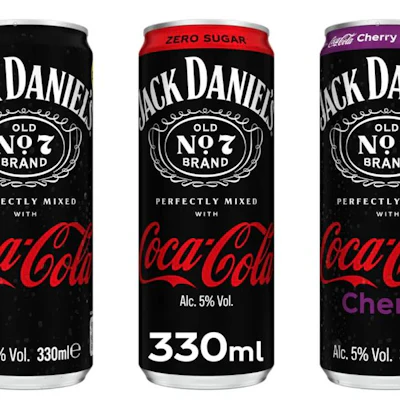
Jack Daniel's & Coca-Cola launch sleek can format to boost shelf appeal and efficiency
Jack Daniel’s & Coca-Colahas introduced a new 330ml can format across its full range of ready-to-drink (RTD) alcoholic beverages in the UK, in response to continued growth in the premium RTD segment. The updated packaging will be available nationwide in convenience outlets, with all variants set to roll out to grocery retailers from March in both plain and price-marked formats. The change aims to improve merchandising efficiency, particularly in chilled and impulse channels, while also enhancing the product’s premium positioning and shelf visibility. Consumer research indicates a strong preference for the new sleek design, with 79% of respondents favoring it over the previous version and 65% stating they would be more likely to choose it in-store. In terms of environmental impact, the new format reportedly uses less material, offering improvements in packaging efficiency, transport, and storage.
The multi-layer carton structure is designed to protect against light, oxygen and microbial contamination.ThePackHub
Pitú's alcoholic smoothie introduced in aseptic carton format
Pitú, a beverage company headquartered in Recife, Pernambuco, Brazil, has introduced Pitú Batidinha in a 250 milliliter (8.45 fluid ounce) aseptic carton. While ready-to-drink (RTD) alcoholic beverages are commonly distributed in aluminum cans or glass bottles, this launch applies carton-based aseptic technology to a creamy, 7.9% ABV cocktail. The multi-layer carton structure, typically composed of paperboard combined with polymer and aluminum barrier layers, is designed to protect against light, oxygen and microbial contamination. This enables ambient storage and extended shelf life without refrigeration prior to opening. The rectangular prism format supports efficient palletization and stacking during transport and retail display, optimizing logistics compared with cylindrical containers. At 250 ml, the single-serve portion aligns with on-the-go consumption occasions, while the lightweight construction reduces material weight relative to glass alternatives. The carton format also allows for a broad printable surface, facilitating product differentiation and brand visibility at point of sale. By selecting an aseptic carton for a creamy alcoholic beverage, the company extends the application of established dairy and juice packaging technology into the alcoholic RTD segment.
The label presents a practical approach to waste reduction in food packaging by combining functionality, consumer engagement, and environmental awareness.ThePackHub
Nacom Goya Ind. E Com. De Alimentos' double-layer label
Brazilian food company Nacom Goya Ind. E Com. De Alimentos has introduced a dual-purpose labeling solution for its Campo Belo preserves that encourages reuse and reduces packaging waste. The innovation consists of a double-layer adhesive label applied to glass jars. The outer layer contains all required product and legal information and is designed for clean removal after use. Once removed, it reveals an inner layer with a chalkboard surface, allowing consumers to repurpose the jar for storing other items and label them by writing directly on the surface with chalk or a chalk pen. The chalkboard layer features a washable finish that withstands cleaning with a damp cloth or sponge without degrading. This solution is positioned as an accessible, cost-neutral design upgrade in a traditionally low-margin and price-sensitive product category. It aims to extend the lifecycle of the packaging through simple reuse, supporting broader sustainability goals without the need for structural packaging changes. The adhesive properties and label die-cutting were specifically developed to ensure smooth and intuitive removal, enhancing usability. By combining functionality, consumer engagement, and environmental awareness, the label presents a practical approach to waste reduction in food packaging.
 The multi-layer carton structure is designed to protect against light, oxygen and microbial contamination.ThePackHub