Alter Eco's Paper Packaging for Chocolate, Mastellone Hermanos Redesigns Paperboard Cup, and Earthnutz Replaces Flexible Plastic Packaging
See a few examples of packaging that showcase paper-based packaging from Alter Eco, Mastellone Hermanos, and Earthnutz from ThePackHub’s Innovation Zone.
The packaging offers high-barrier protection against moisture and grease, and is reported to be recyclable through the paper waste stream where infrastructure is available.
ThePackHub
These innovations highlight the significant progress being made in adopting paperbased solutions, driven by both functionality and sustainability.
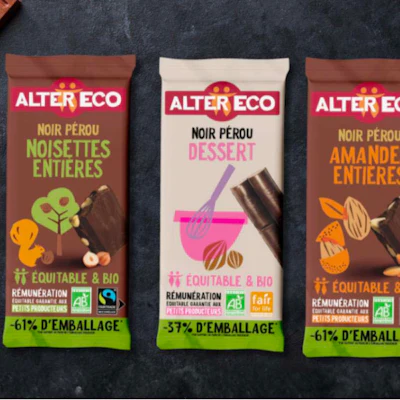
Alter Eco's paper-based pack reduces weight and improves recyclability for chocolate range
Packaging company Amcor has collaborated with French snack brand Alter Eco to develop a paper-based packaging solution for a 200g chocolate bar range sold in France. The new packs, used across three product variants, have replaced the previous combination of a cardboard sleeve and inner aluminum foil with Amcor’s AmFiber Performance Paper. Developed with Swiss co-packer Halba, the solution maintains a premium aesthetic through a matte finish and natural kraft paper appearance. Special attention was required for the variant containing whole almonds to retain a smooth visual profile despite the textured surface. The packaging offers high-barrier protection against moisture and grease, and is reported to be recyclable through the paper waste stream where infrastructure is available. Significant reductions in packaging weight were achieved, ranging from 37% for the dark dessert chocolate to 61% for the variants containing whole hazelnuts and almonds. Amcor states that the fiber material is certified by the Forest Stewardship Council (FSC), ensuring responsible sourcing, and the design is aligned with CEPI (Confederation of European Paper Industries) and 4evergreen guidelines for recyclability.
The solution integrates a lightweight thermoformed polystyrene inner cup with a 100% FSC-certified paperboard sleeve that contains no plastic coatings.ThePackHub
Mastellone Hermanos' paperboard-based dairy cup reduces virgin plastic
Mastellone Hermanos, an Argentina-based dairy company known for its La Serenísima brand, has introduced a redesigned packaging format for its Finlandia spreadable cheese, using a paperboard-based cup that reduces virgin plastic usage by 8%. The new solution integrates a lightweight thermoformed polystyrene inner cup with a 100% FSC-certified paperboard sleeve that contains no plastic coatings. Developed over a year through internal eco-design guidelines, the package maintains compatibility with existing filling and packaging lines, avoiding the need for machinery upgrades. This was achieved by re-engineering the cup’s morphology to ensure efficient processing. Key development challenges included ensuring reliable adhesion between the cup and sleeve without additional coatings, achieving thermal performance during hot fill and cold chain conditions, and maintaining consumer convenience for end-of-life separation and recycling. The die-cut paperboard sleeve was specifically designed to remain secure during distribution while being easily removed by consumers, and Mastellone incorporated disposal instructions directly on the pack.
The cylindrical pack is described as 95% paper-based and contains up to 64% post-consumer recycled (PCR) fiber content.ThePackHub
Earthnutz move into 95% paper-based composite can
Earthnutz has adopted a paper-based composite can developed by Sonoco for its high-protein peanut crisps, replacing conventional flexible plastic snack packaging. The cylindrical pack is described as 95% paper-based and contains up to 64% post-consumer recycled (PCR) fiber content. The format is designed to reduce reliance on multi-material flexible plastics that are often difficult to recycle within existing household waste systems. According to the companies, the can is compatible with UK household paper recycling streams, supporting fiber recovery at end of life. Sonoco’s paper can has been engineered to minimize plastic content while maintaining the structural integrity and barrier performance required to protect low-moisture snack products during distribution and retail display. The rigid format aims to provide sufficient mechanical strength to prevent product breakage and maintain crispness retention, addressing a key functional requirement in the snacking category. The design also seeks to reduce shipping inefficiencies associated with lightweight flexible films, although the overall carbon impact will depend on transport configurations and supply chain logistics.
 The solution integrates a lightweight thermoformed polystyrene inner cup with a 100% FSC-certified paperboard sleeve that contains no plastic coatings.ThePackHub