This content was written and submitted by the supplier. It has only been modified to comply with this publication’s space and style.
North American and Canadian food production lines adhere to rigorous quality and safety standards that are recognized globally. Continually striving to balance operational efficiency and reduce food waste with environmental stewardship, manufacturers rely on advanced inspection systems to support these objectives.
From 1996, Fortress Technology intentionally designed its metal detection systems to be modular, upgradable and built to last. It has been a sustainable investment model from the outset that supports innovation without compromising performance. During the past thirty years, customers worldwide have placed significant value on these various software upgrades and enhancements, which have enabled them to comply with evolving food safety regulations and adapt to changing factory layouts.
Fortress founder Steve Gidman summarizes: “The cycle of parts breaking down, being thrown away and then having to be replaced is not just wasteful, it is also unsustainable long term. In many instances, the machinery on a line represents millions in capital expenditure and often has potentially decades of useful life in it.”
Upgrades extend the lifespan of capital investments
The longevity of an inspection system is heavily influenced by build quality. Some of the earliest analogue Fortress metal detectors installed nearly 30 years ago continue to operate today, but with efficient digital features. At the time of commissioning, these features were yet to be invented.
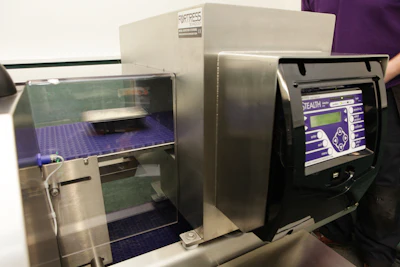
Numerous Canadian and U.S. customers have benefited from these updates. For example, one of the largest grain processors in the US upgraded more than 10 of their original metal detectors to Stealth technology. This update introduced new data logging features and advanced software algorithms that improved detection sensitivity. The original units were over a decade old.
Following a similar principle, another global food processor was able to introduce a digital feature to record every signal generated by each product bag passing through the aperture of their metal detectors. Fortress supplied modular communication adapters, enabling automatic data extraction to a central database. In addition to delivering the requested functionality, this upgrade strengthened reporting capabilities and overall quality assurance.
Always innovating for a circular future
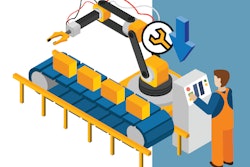
Scalability and simplicity are at the forefront of Fortress inspection system designs. Each machine allows upgrades with minimal disruption, downtime and investment. “Rolling out upgrades requires far less time, capital and business interruption compared to commissioning an entirely new build and installation,” notes Gidman.
Fortress Technology search heads, electronic boards and other parts can be replaced with the latest revisions, while software can be upgraded to the newest iteration. This modular design model means that components can be added or reconfigured to deliver customized inspection systems. For example, last year, Ardent Mills activated automatic testing and automated QA documentation to maximize equipment and operational efficiency.
Adaptations of this scale are only feasible if the metal detector has a stable hardware platform, affirms Gidman.
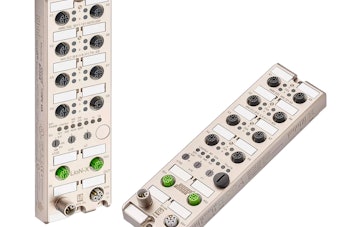
Interchangeable components simplify maintenance, allowing site engineers to quickly troubleshoot, replace parts and restore functionality with minimal downtime. Optional expandable I/O hardware further increases connectivity, such as adding extra communication between upstream and downstream systems or enhancing integration with PLCs, reject devices and monitoring equipment.
Sustainability in food production does not always mean radical reinvention, notes the Fortress founder. “In the case of inspection equipment, it means designing machines to be simple, upgradeable and built to last.”
Technology designed for adaptability offers more than convenience; it bridges the gap between legacy systems and today’s digitally connected production lines. The Fortress ‘Never Obsolete’ commitment embodies this philosophy, enabling manufacturers to meet today’s standards while protecting tomorrow’s resources.