For more than three decades, Michael Martin has been operating at the intersection of capitalism, culture, and climate. A former investment banker turned sustainability entrepreneur, Martin has helped shape some of the most influential environmental movements of the modern era, from Earth Day’s global expansion to introducing sustainability to the live events industry. Today, he is still just as active as he focuses on what he calls the most broken system of all: waste.
“People think the problem is litter,” Martin says. “The problem is infrastructure. The waste system itself doesn’t work.”
As founder and CEO of r.World, a company building reusable packaging systems for venues, campuses, and institutions, Martin is betting that reuse can succeed where decades of recycling initiatives have failed.
A Career-Defining Wake-Up Call
Martin’s pivot toward sustainability was not a life-long passion turned profession. There was a clear “aha” moment for him that shifted his entire career trajectory. In 1989, while working in investment banking, the Exxon Valdez oil spill dominated headlines. For Martin, it triggered a drastic response.
“I remember thinking, this is not what business should be doing to society,” he says. “Business should be doing good stuff.”
At the time, Martin was on a traditional high-powered trajectory—elite business school, real estate investment banking, major financial deals. “I was 28, 29 years old, structuring mortgage-backed securities and financing malls,” he recalls. “And I started asking myself: what value am I actually creating for the world?”
That question would redefine his career.
Rather than abandoning capitalism, Martin sought to retool it. “I’m a capitalist,” he says plainly. “I just believed there was a better way to do it where I could use capitalism and culture to create change.”
Over the next 36 years, Martin would repeatedly identify emerging sustainability challenges and respond by creating campaigns, companies, and systems designed to shift behavior at scale.
From 1990 to 1995, he produced nationally broadcasted Earth Day stadium concerts and helped form the Earth Day Network, now the largest international secular environmental event in the world. He launched one of the first climate change awareness campaigns through a Ben & Jerry’s collaboration with Dave Matthews Band. He worked with Toyota to help launch the Prius in the U.S. market, and advised Apple on its sustainability strategy.
Along the way, Martin became deeply embedded in the music industry—an influence that would later prove critical.
“Billboard calls me the guru of live event greening,” he says. “Because back in 1990, when we were producing these Earth Day concerts, I thought you can’t produce a concert for the environment and not produce it sustainably. Over the last 36 years, that is what I focused on...”
The Waste Crisis No One Wants to Admit
Despite decades of recycling campaigns, Martin believes the industry has been avoiding a hard truth.
“The waste system at live events is sort of a microcosm of society,” he explains. “And it’s broken.”
Only about 9% of plastic is recycled in the U.S., he notes. Aluminum, while often touted as sustainable, is highly energy-intensive and frequently lined with plastic. Compostable products, meanwhile, often end up in landfills due to the lack of industrial composting infrastructure.
“There’s no such thing as ‘away,’” Martin says. “You can’t throw something away. It’s just going someplace else.”
By 2017, Martin concluded that incremental improvements to single-use packaging, things like lighter materials, better labeling, and advanced recycling were not enough.
“So, I decided to focus on launching the reuse movement in this country,” he says. “Not just the product, but the ecosystem and infrastructure needed to make it work.”
r.World and the Rise of Reuse Infrastructure
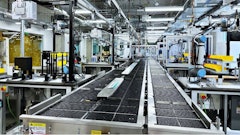
That decision led to the founding of r.World, a company providing reusable cups, serveware, and the logistics, sanitation, tracking, and quality control systems that make reuse viable at scale.
“Our product isn’t just the cup,” Martin explains. “It’s reverse logistics, washing, quality control, environmental impact tracking—it’s the whole system.”
Today, r.World operates industrial wash facilities in major U.S. markets including Los Angeles, San Francisco, Denver, the Twin Cities, and Washington, D.C. Its reusable systems are deployed at large venues such as Crypto.com Arena, Red Rocks Amphitheatre, and major sports stadiums, as well as zoos, aquariums, schools, hospitals, and corporate campuses.
The company has washed more than 25 million reusable units and holds nearly 60% market share in its category.
“We’re the largest by far,” Martin says. “But more importantly, we’re viewed as a premium solution because we prioritize operational ease, environmental impact, and quality of service.”
Designing for Human Behavior
One of reuse’s biggest historical challenges, as is the case with recycling endeavors, has been consumer compliance. Martin believes the way around that is to make reuse as simple as possible.
 r.World provides reusable cups, serveware, and the logistics, sanitation, tracking, and quality control systems that make reuse viable at scale.r.World
That design choice has yielded impressive results: an average 90% harvest rate, far exceeding typical recycling capture rates.
“We think a lot about human behavior,” Martin adds. “It’s the placement of bins, the color, the signage, the messaging, the training of staff. And honestly? It helps that the cup is ugly; it isn’t something you want to take home.”
By removing decision-making from the consumer and embedding reuse into the built environment, Martin argues that behavior change becomes scalable, even in regions with low environmental awareness.
“In a closed-loop system, it doesn’t matter if someone believes in climate change or not,” he says. “If there’s only one place to put the cup, you get a high return rate. The issue is for closed-loop, or hybrid environments where the cup’s end of life falls outside the parameter of control.”
Closed Loop First, Open Loop Later
r.World focuses primarily on closed-loop and hybrid environments. Closed-loop meaning concert venues, sports venues, and hospitals, where products are mostly consumed onsite. Hybrid environments are those like food courts and campuses, where product is mostly consumed on site, but consumers can take it off site. Then lastly, a fully open-loop systems, such as fast-food chains, remain a future challenge.
“The world isn’t ready yet for open-loop reuse at scale,” Martin admits. “But markets like Denver are getting close.”
In Denver, where r.World has broad penetration, Martin says nearly everyone has interacted with a reuse system. That familiarity, he believes, is critical.
“This is movement building,” he says. “Once a community gets re-educated, reuse becomes normal.”
Reduce, Reuse, Recycle—In That Order
When talking about the three well-known R’s of sustainability, Martin offers a ranking system.
“The best thing you can do is reduce,” he says. “Reduce any single-use waste. Reuse comes next. Recycling is last.”
For packaging professionals, Martin emphasizes that reuse is not a silver bullet—but it should be prioritized. He also challenges the assumption that single-use alternatives—such as aluminum cups—are inherently sustainable.
“The lifecycle impact is enormous,” Martin explains. “Mining, smelting, manufacturing, shipping, and then maybe recycling it again—if it gets captured at all.”
For the next generation of packaging engineers, Martin urges systems thinking.
“Start by asking: how can packaging be eliminated?” he says, pointing to innovations like shampoo bars and bulk delivery.
He also raises unresolved questions about recycled plastics and microplastics. “We need to understand whether recycled plastic leaches more micro- or nanoplastics than virgin plastic,” he says. “I honestly do not know the answer, but if it does, we may be creating a new health crisis.”
Above all, Martin emphasizes end-of-life accountability.
“There’s no such thing as ‘away,’” he repeats. “Whatever you create, you have to think about where it ends up.”
Looking ahead, Martin wants to see a redefinition of “zero waste.”
“Recycling and composting are still waste,” he says. “A true zero-waste system is bulk and reuse.”
He envisions national reuse infrastructure, citywide systems that outperform recycling both economically and environmentally. He points to Europe, where single-use items are increasingly rare, as a glimpse of what’s possible.
“Capitalism has to evolve to succeed,” Martin says. “The future depends on understanding the impact of every decision; not just on shareholders, but on people and the planet.”
For Martin, reuse isn’t just a packaging strategy. It’s the next major sustainability movement, and one he believes is finally ready to scale.